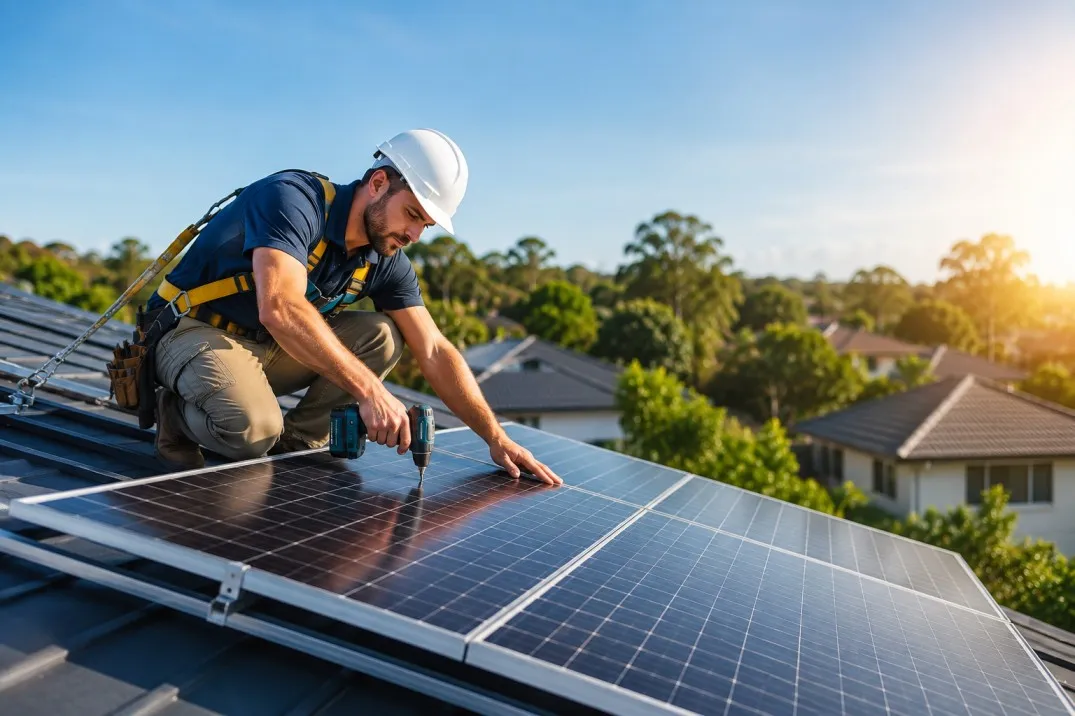
Choosing solar is a long-term decision. The panels, inverter, battery and other equipment can remain part of a property's energy system for many years, so selecting the right installation company matters just as much as selecting the products themselves.
For homeowners and businesses searching for the best solar company installer on the Gold Coast, it can be tempting to compare companies based on price alone. However, a lower quote does not necessarily mean better value.
A quality solar installation involves much more than placing panels on a roof. The system needs to be designed around electricity consumption, property characteristics, equipment compatibility, electrical requirements and future energy goals.
The Clean Energy Council recommends that consumers research solar retailers and installers, compare multiple quotes and ask questions about system design, warranties and installer accreditation.
Here are seven factors worth considering before choosing a solar company.
1. Check Installer Accreditation and Licensing
Solar installation involves electrical work, so qualifications and licensing should be among the first things you investigate.
The national solar installer accreditation scheme transitioned to Solar Accreditation Australia (SAA), which now manages installer and designer accreditation for the Small-scale Renewable Energy Scheme.
In Queensland, electrical work must be performed by a licensed electrician. The Queensland Electrical Safety Office also recommends using electricians who regularly work with solar energy systems.
Consumers can use the Queensland Electrical Licence Search to check electrical contractor licence information.
When comparing the best solar company installer options, ask:
- Is the electrician appropriately licensed?
- Does the installer hold current solar accreditation?
- Can the company provide relevant accreditation details?
- Who will actually carry out the installation?
- Is the installation completed by employees or subcontractors?
These questions can help establish whether a company has the appropriate technical foundation for the project.
2. Look for Property-Specific System Design
A good solar system should be designed for the property rather than selected from a generic package.
Every building has different electricity consumption patterns. Roof orientation, shading, available roof area and electrical loads can also affect system design.
For example, a household that uses most of its electricity during the evening may have different requirements from a business that operates primarily during daylight hours.
The same principle applies to rural and off-grid properties, where energy requirements can be more complex.
A site-specific assessment should consider factors such as:
- Current electricity consumption
- Solar generation potential
- Roof orientation
- Shading
- Available installation space
- Switchboard requirements
- Existing solar equipment
- Battery storage requirements
- EV charging
- Future energy consumption
The Clean Energy Council's consumer guidance specifically recommends asking whether a retailer will provide a site-specific design and performance estimate.
This is one of the clearest ways to distinguish a tailored solar proposal from a simple sales package.
3. Compare the Equipment, Not Just the Price
A solar quote should identify the actual equipment being proposed.
Instead of comparing two quotes based only on total price, look at the:
- Solar panel manufacturer and model
- Inverter manufacturer and model
- Battery brand and capacity
- Mounting equipment
- Monitoring platform
- EV charger, if included
- Backup equipment, if required
- Installation and electrical work
The Clean Energy Council maintains approved product lists for solar PV modules, inverters and battery energy storage equipment suitable for use in Australia.
This is important because product requirements and standards can change.
For example, current CEC guidance states that new solar installations seeking Small-scale Technology Certificates must use PV modules meeting the applicable 2021 standards and appearing on the approved products list.
As a consumer, you do not need to become a technical expert. However, you should know exactly what equipment you are paying for.
A reputable installer should be comfortable explaining why particular products have been recommended.
4. Consider Battery Storage and Future Energy Needs
Solar is increasingly becoming part of a broader home or business energy system.
A property may eventually need:
- Battery storage
- Backup power
- EV charging
- Additional solar generation
- Energy management
- Off-grid capability
Even if a battery is not being installed immediately, it can be worth discussing future storage requirements during the initial solar design.
For example, the inverter selected today may influence future battery options. Electrical infrastructure may also need to accommodate additional equipment.
Similarly, an EV owner may want the solar system designed with future vehicle charging requirements in mind.
The best solar company installer should be able to discuss the broader energy picture rather than treating solar panels as an isolated purchase.
5. Understand Warranties and After-Sales Support
Solar systems are designed for long-term use, so warranty information deserves careful attention.
There can be several different types of warranties associated with a solar installation.
Product warranties
These are provided by manufacturers and may cover panels, inverters, batteries and other equipment.
Performance warranties
Some solar panels include long-term performance guarantees relating to their power output.
Workmanship warranties
These cover aspects of the installation itself and are generally provided by the installer.
Battery warranties
Battery warranties can have specific conditions relating to capacity retention, cycles, operating temperatures and other factors.
Ask the installer to explain which company is responsible for each warranty.
You should also keep copies of contracts, product documentation, warranties and installation records.
Queensland Government guidance recommends retaining the documentation supplied by the installer, including information required for warranty purposes and maintenance schedules.
6. Find Out Who Performs the Installation
The company selling the solar system is not always the same entity that physically installs it.
Some businesses use subcontractors for installation, while others employ their own electricians.
Neither approach automatically determines whether an installer is good or bad, but customers should understand who is responsible for the work.
Ask:
Who will be on my roof installing the system?
Also ask who will handle any issues after installation.
A clear answer provides greater transparency about accountability.
The Clean Energy Council's consumer resources explain that solar projects can involve separate retailers, designers and installers, and recommend checking the credentials and experience of the people responsible for the system.
For a complex residential, commercial or off-grid installation, having clear communication between design and installation teams can be particularly valuable.
7. Look Beyond the Initial Quote
The cheapest solar quote is not automatically the best value.
When comparing proposals, consider the entire package.
A quote should make it reasonably clear what you are getting and what is excluded.
Important questions include:
- Is the site assessment included?
- Is installation included?
- Are electrical upgrades included?
- Is monitoring included?
- Is battery-ready infrastructure included?
- Are grid connection requirements covered?
- What happens if additional work is required?
- What warranties are provided?
- Who provides after-sales support?
- What is the expected system performance?
The Clean Energy Council recommends obtaining multiple quotes and researching retailers before making a decision.
Comparing several detailed proposals can make it easier to identify differences that are hidden when customers focus only on the headline price.
Why Local Knowledge Can Matter on the Gold Coast
The Gold Coast includes a wide range of properties, from suburban homes and townhouses to larger acreage properties and commercial buildings.
Energy requirements can therefore vary significantly.
A household might be primarily interested in reducing electricity purchases, while another property may need battery backup. A commercial building may have substantial daytime electricity consumption, while an acreage property may require an off-grid solution.
A local solar company can assess the physical characteristics of the property and discuss the energy goals directly with the customer.
However, local presence should still be considered alongside qualifications, experience, product selection, warranties and customer support.
Residential Solar Requires a Different Approach From Commercial Solar
A good solar company should understand that different property types have different requirements.
Residential solar
Residential systems are often designed around household electricity consumption, available roof space and the goal of reducing grid electricity purchases.
Battery storage may also be considered for evening energy use or backup.
Commercial solar
Commercial projects can involve larger systems and more complex electricity consumption patterns.
The business's operating hours, equipment and demand profile can influence the ideal system size and configuration.
The Clean Energy Council's guidance for business and industry notes that commercial solar installations can have different installation and inverter requirements and recommends ensuring the installer has relevant experience for the system size.
Off-grid solar
Off-grid properties have additional considerations because there may be no conventional grid supply available.
Solar generation, battery storage, inverter capacity and backup options all need to work together.
For these installations, careful system design is particularly important.
What Makes Energy Solution Centre Different?
Energy Solution Centre operates from 19 Price St, Nerang, and specialises in renewable energy solutions for residential, commercial and off-grid applications.
The company offers solar power, battery storage, off-grid systems, EV charging and commercial solar.
Its approach focuses on tailoring systems to individual customer requirements rather than applying a one-size-fits-all package.
That approach can be useful because energy requirements differ substantially between properties.
A small residential system, a large solar array, a battery-backed home and a remote off-grid property may all require completely different designs.
Energy Solution Centre also works with a range of solar power, battery storage, energy management, off-grid and EV charging brands, allowing solutions to be developed around the customer's intended outcome.
Questions to Ask Before Choosing a Solar Company
Before signing a contract with any installer, consider asking these questions.
Is the proposed system designed specifically for my property?
The proposal should take your electricity consumption and property characteristics into account.
What exact products are being installed?
Request manufacturer names and model numbers rather than generic descriptions.
Are the products approved for use in Australia?
The Clean Energy Council maintains current approved product lists for relevant solar and battery equipment.
Who will perform the installation?
Confirm who is responsible for the physical installation and electrical work.
Is the electrician licensed?
Queensland's Electrical Safety Office recommends confirming the contractor's licence before agreeing to electrical work.
What warranties are included?
Ask for product, performance and workmanship warranty details.
What happens if I want a battery later?
Discuss future expansion before selecting the initial solar system.
Can the system support EV charging?
If an electric vehicle is part of your future plans, include that consideration in the initial energy assessment.
What happens after installation?
Find out how monitoring, maintenance, troubleshooting and warranty issues are handled.
Don't Forget Ongoing Maintenance
Solar panels generally require relatively little maintenance, but they should not simply be forgotten after installation.
Queensland Government guidance explains that dust, debris, vegetation and storm damage can affect solar panels, wiring and control systems over time. It recommends using appropriately qualified professionals for close inspections and electrical work.
The Queensland Electrical Safety Office similarly recommends using licensed electricians for electrical maintenance and repairs involving solar systems.
A good installer should explain what maintenance is recommended and provide the relevant documentation when the system is commissioned.
The Importance of Customer Service
Solar installation is a process rather than a single transaction.
Customers may need help understanding the proposal before installation, monitoring the system afterwards or addressing questions about warranties and performance.
A company that communicates clearly throughout the project can make the overall experience considerably easier.
Look for an installer that is prepared to explain:
- Why the system has been designed that way
- What the equipment does
- What performance you can reasonably expect
- What the warranties cover
- What happens during a power outage
- How monitoring works
- Who to contact for support
Clear communication is particularly important when installing batteries, EV chargers or off-grid equipment because these systems can be more complex than a basic rooftop solar installation.
Final Takeaway
Finding the best solar company installer is not about selecting the company with the biggest advertisement or the lowest price.
A stronger approach is to compare qualifications, system design, equipment, installation practices, warranties, future energy options and customer support.
For Gold Coast homeowners and businesses, it is also worth considering whether today's solar system needs to accommodate tomorrow's energy requirements, such as battery storage, EV charging or greater energy independence.
Taking the time to ask the right questions before installation can help you choose a solar partner capable of designing an energy solution that fits your property rather than forcing your property into a standard package.
Frequently Asked Questions
What should I look for in the best solar company installer?
Look for appropriate licensing and accreditation, property-specific system design, quality equipment, transparent pricing, clear warranties and reliable after-sales support.
Should I choose the cheapest solar company?
Not necessarily. Compare the complete system, equipment specifications, installation quality, warranties, expected performance and customer support rather than price alone.
How can I check a Queensland solar electrician's licence?
The Queensland Electrical Safety Office provides an online Electrical Licence Search where consumers can verify electrical contractor licence information.
Should I consider battery storage when choosing a solar installer?
Yes. Even if you do not need a battery immediately, discussing future storage can help ensure the initial solar system is suitable for later expansion.
How do I check whether solar products are approved?
The Clean Energy Council maintains approved product lists for PV modules, inverters and battery energy storage devices.
Is a local solar installer better?
Local knowledge can be useful for property assessments and ongoing support, but customers should also consider accreditation, licensing, experience, system design, equipment quality and warranties.