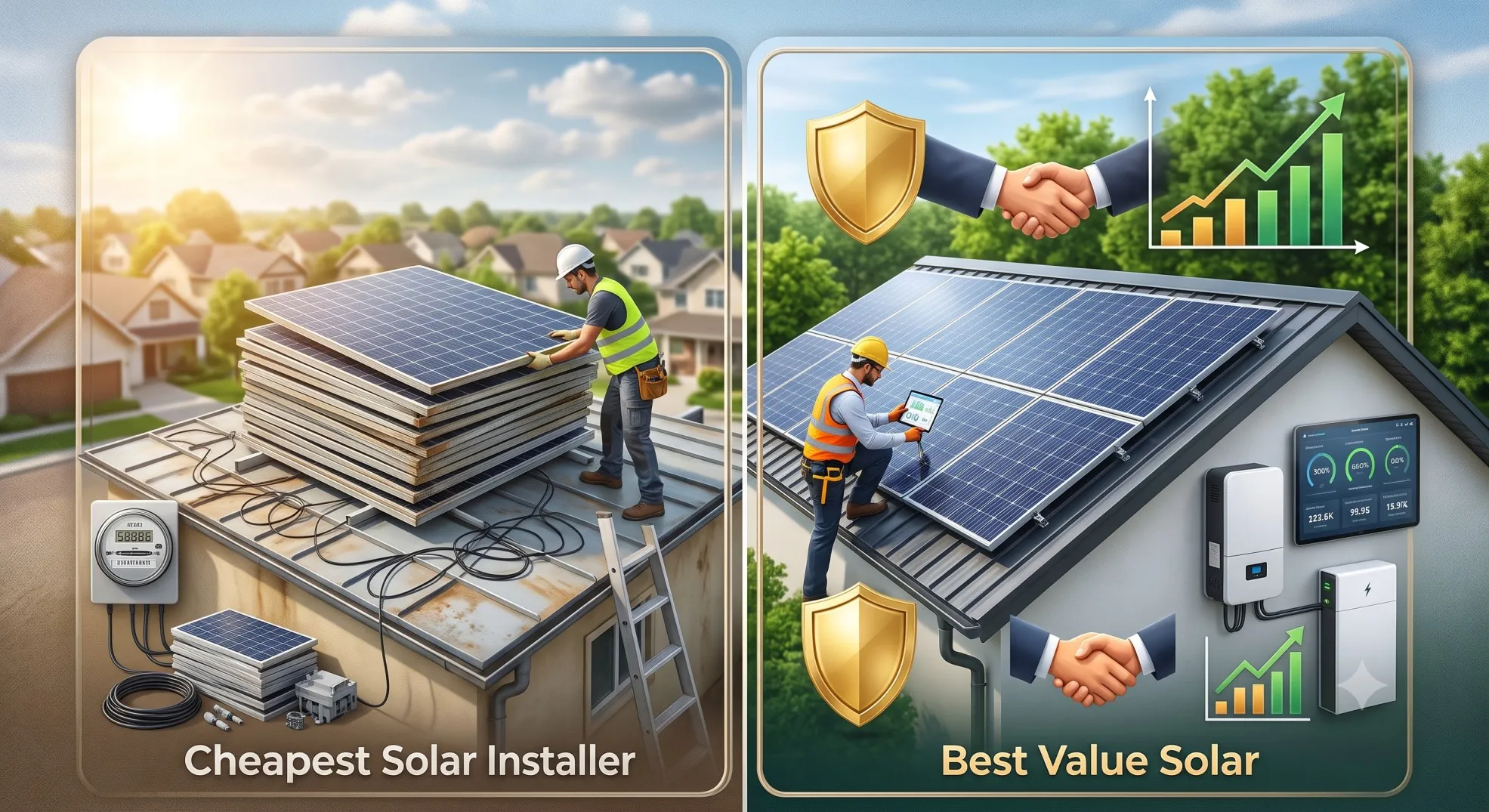
Price is understandably one of the first things Australian homeowners consider when investing in solar. With providers offering systems at widely different price points, searching for the cheapest solar installer can seem like a sensible way to reduce upfront costs.
However, the lowest installation price and the best overall value are not necessarily the same thing.
A solar system is designed to operate for many years, so the initial quote represents only one part of the ownership experience. Equipment quality, system design, installation standards, warranties and after-sales support can all influence whether a solar investment delivers lasting value.
This does not mean that affordable solar is automatically lower quality or that a more expensive system is always better. The key is understanding what you are receiving for your money and whether the proposed system is appropriate for your property.
For Australian homeowners comparing solar quotes, looking beyond the headline price can lead to a more informed decision.
What Does the Cheapest Solar Installer Really Mean?
When people search for the cheapest solar installer, they are often looking for more than simply the lowest possible price. They usually want to avoid overpaying while still receiving a dependable system.
That distinction is important.
The cheapest quote in a group of proposals simply means it has the lowest stated price. It does not automatically indicate whether the system is suitable, well designed or supported over the long term.
Solar quotes can vary because providers may recommend different panels, inverters, system sizes and installation arrangements. One quote might include work that another excludes, while warranty and support arrangements can also differ.
Before deciding which installer is genuinely affordable, homeowners should compare what is included in each proposal.
The goal should be to identify good value rather than focusing on price in isolation.
Why Solar Installation Prices Can Vary
There is no universal price for installing solar because every property and system can present different requirements.
System capacity is one obvious factor. A larger solar array generally requires more panels, mounting equipment and installation work than a smaller system.
Equipment choices can also affect price. Solar panels and inverters are available across different product ranges, with variations in specifications, warranties and manufacturer support.
Property characteristics matter as well.
Roof type, height, accessibility, switchboard condition and installation complexity may influence the amount of work required. Some properties may need additional electrical work that others do not.
Battery storage and EV charging can further change the scope and cost of a project.
When comparing the cheapest solar installer with other providers, homeowners should therefore ask why prices differ rather than assuming every quote covers an identical system.
Cheapest Price vs Best Value: What Is the Difference?
Price is straightforward: it is what you pay.
Value is broader.
A good-value solar system should balance cost with factors such as equipment suitability, system design, installation quality, warranty protection and ongoing support.
Imagine two providers offering similarly sized solar systems at different prices. The lower-priced system may be perfectly suitable, particularly if it uses appropriate equipment and includes professional installation.
Alternatively, the higher-priced proposal might include different equipment, more complex installation work, stronger support arrangements or other features that explain the difference.
Neither option should be judged on price alone.
Searching for the cheapest solar installer can be a useful starting point, but comparing overall value provides a better framework for making a long-term decision.
Compare the Complete Solar System
One of the easiest mistakes when comparing quotes is focusing only on the number of panels or advertised system capacity.
A solar installation is a complete energy system.
Solar panels are important, but so are the inverter, mounting equipment, electrical components, monitoring features and overall design.
Ask each provider to identify the exact panel and inverter models included in the quote.
Check whether the system capacity is clearly stated and whether monitoring is included. Find out if additional electrical or switchboard work could result in extra costs.
Homeowners comparing offers from the cheapest solar installer and other providers should try to compare equivalent systems wherever possible.
If one quote is significantly cheaper, identify the reason.
There may be a perfectly reasonable explanation. What matters is understanding the difference before making a decision.
Consider Whether the System Is Properly Sized
An inexpensive solar system is not necessarily good value if it does not suit the household’s energy requirements.
System sizing should consider factors such as electricity consumption, available roof space, orientation, shading and realistic future needs.
A household with significant daytime electricity use may have different requirements from one where most consumption occurs after sunset.
Future plans can also matter.
An electric vehicle may increase household electricity demand, while adding battery storage can change how solar generation is used throughout the day.
A provider should be able to explain why a particular system size has been recommended.
When searching for the cheapest solar installer, be cautious about choosing a standard package solely because it has an attractive advertised price. The system should still make sense for your property and energy goals.
Check the Products Included in the Quote
Equipment is another area where solar quotes can differ.
Solar panels and inverters come from numerous manufacturers, and products vary in specifications, warranty terms and support arrangements.
Rather than relying on descriptions such as “premium” or “high performance”, ask for the exact make and model of the proposed equipment.
Australian consumers can also research whether products meet applicable requirements. The Clean Energy Council approved products program provides information about approved solar PV modules, inverters and energy storage products.
An approved product is not automatically the best choice for every property, but checking product information can help homeowners make a more informed comparison.
The cheapest solar installer may offer perfectly suitable equipment. The important point is to verify what you are buying rather than assuming all solar panels and inverters are equivalent.
Check Installer Credentials and Consumer Protections
The quality of solar equipment is only part of the equation. Installation quality matters too.
Solar involves specialised electrical work, so homeowners should understand who will design and install the system and which relevant credentials apply.
Do not rely solely on marketing statements.
Ask who will physically perform the installation and whether the necessary licences, accreditation or competencies can be verified.
The Australian Government’s Solar Consumer Guide provides independent information about choosing solar retailers and installers, understanding quotes and contracts, and navigating the solar purchasing process.
This type of research is particularly useful when comparing low-priced offers.
Finding the cheapest solar installer should never mean overlooking basic checks relating to qualifications, consumer protections or installation standards.
A transparent provider should be comfortable explaining who is responsible for each stage of the project.
Understand What the Warranty Covers
A long warranty can sound reassuring, but homeowners should understand exactly what is covered.
Solar installations can involve several warranties.
Panels may have separate product and performance warranties. Inverters typically have their own manufacturer warranty, while installation workmanship may be covered separately.
Battery storage and EV charging equipment can introduce additional warranty terms.
When comparing quotes, ask who handles warranty claims and what process applies if equipment develops a problem.
Find out whether labour associated with warranty work is always covered and whether exclusions or conditions apply.
This is particularly important when evaluating the cheapest solar installer against other providers.
A low upfront cost may still represent excellent value if the warranty arrangements are clear and dependable. However, a cheap system with limited support could become less attractive if obtaining assistance later proves difficult.
Look Carefully for What Is Excluded
A low headline quote may not always represent the final cost.
Before accepting a proposal, check what is included and excluded.
Some properties may require additional switchboard work, specialised mounting arrangements or other electrical upgrades. Installation complexity can also vary depending on roof characteristics and accessibility.
Ask whether the quoted price is fixed based on the information currently available and what circumstances could result in additional charges.
The contract should clearly identify the proposed equipment and installation scope.
When evaluating the cheapest solar installer, transparency is essential.
An affordable quote that clearly explains costs can be easier to assess than a very low advertised price that leaves important details uncertain.
If something in a proposal is unclear, ask for clarification in writing before committing.
Think About After-Sales Support
Solar systems are intended to operate for many years, which makes after-sales support an important part of overall value.
Homeowners may eventually need assistance with system monitoring, technical questions, warranty claims or future upgrades.
Before choosing an installer, ask what happens after commissioning.
Will someone explain how to monitor solar generation? Who should you contact if the inverter displays an error? How are warranty enquiries handled?
The answers can reveal important differences between providers.
The cheapest solar installer may offer excellent ongoing support, but this should be confirmed rather than assumed.
Local support can also be valuable. A provider with an established presence in the area may offer a convenient point of contact when customers have questions about their system.
Long-term service should therefore be considered alongside upfront pricing.
Consider Future Battery Storage and EV Charging
A solar system that meets your needs today may need to accommodate different energy requirements in the future.
Battery storage is one example.
A battery can store excess solar electricity for use later, but integration depends on system design, equipment compatibility and household energy requirements.
Electric vehicles can also significantly change electricity consumption.
If you expect to purchase an EV or install a battery in the future, mention these plans when obtaining solar quotes.
This does not mean paying for equipment you do not currently need.
Instead, it allows the installer to explain whether the proposed system is compatible with realistic future plans and what upgrades might eventually be required.
When comparing the cheapest solar installer with other options, considering future flexibility can help you assess long-term value more accurately.
Be Careful With Unrealistic Savings Claims
Solar can help many households reduce the amount of electricity they purchase from the grid, but financial outcomes vary.
Savings can depend on system generation, household electricity consumption, energy tariffs, export rates and how much solar electricity is used directly.
For this reason, homeowners should be cautious about guaranteed savings claims that do not appear to account for their individual circumstances.
Ask providers to explain the assumptions behind projections.
A transparent proposal should distinguish between estimates and guaranteed outcomes.
When researching the cheapest solar installer, an attractive price combined with exaggerated savings claims should not replace careful analysis.
A realistic assessment of your property and electricity usage provides a stronger basis for making a decision.
Why the Most Expensive Solar Installer Is Not Automatically Better
Looking beyond the cheapest option does not mean choosing the most expensive provider.
A higher price does not automatically guarantee better equipment, workmanship or service.
The same comparison process should apply regardless of price.
Check the system design, products, credentials, warranties, installation scope and support arrangements.
Ask why one proposal costs more than another and whether the additional expense provides meaningful benefits for your property.
The objective is to identify value, not to assume that price alone indicates quality.
A reasonably priced system that is carefully designed and professionally installed may provide better value than both the cheapest and most expensive quotes.
That is why homeowners searching for the cheapest solar installer should broaden the comparison to include the complete solar offering.
Questions to Ask Before Choosing an Affordable Solar Installer
Asking each provider the same questions can make solar quotes easier to compare.
Start by asking why the recommended system size suits your household. Find out whether your electricity consumption, roof characteristics and future energy plans were considered.
Confirm the exact solar panel and inverter models.
Ask who will install the system and what relevant credentials apply.
Request clear warranty information and find out how claims are handled.
You should also ask whether any circumstances could result in costs beyond the quoted price.
Finally, clarify what after-sales support is available.
These questions can help you determine whether the lowest-priced proposal represents genuine value or simply a lower initial cost.
Frequently Asked Questions
Is the cheapest solar installer always the best choice?
No. The cheapest solar installer may offer a suitable and good-value system, but price alone does not indicate system quality. Compare equipment, system design, credentials, installation scope, warranties and after-sales support before deciding.
How can I tell whether a cheap solar quote offers good value?
Check exactly what is included in the quote. Compare the proposed panel and inverter models, system size, installation work, warranties and ongoing support. A good-value quote should be transparent and appropriate for your property rather than simply inexpensive.
Why do solar installation quotes vary so much?
Prices can vary because of system size, equipment choices, roof characteristics, installation complexity, electrical work, warranties and service levels. Comparing the details behind each quote can help explain significant price differences.
Should I choose a more expensive solar installer for better quality?
Not automatically. A higher price does not guarantee better quality. Compare the complete proposal and determine whether any additional cost provides meaningful benefits in equipment, design, installation or support.
Should future battery storage affect which solar installer I choose?
It can. If you are considering battery storage or EV charging later, discussing those plans during the initial solar design can help you understand compatibility and potential future upgrade requirements.
Choosing Value Rather Than Price Alone
The difference between the cheapest solar installer and the installer offering the best value comes down to more than the number at the bottom of a quote. Australian homeowners should compare system design, equipment, relevant credentials, installation scope, warranty protection, future flexibility and after-sales support alongside the upfront cost. An affordable quote can provide excellent value when it is transparent and suited to the property, while paying more does not automatically guarantee a better result. For homeowners and businesses around Southport and Chirn Park seeking tailored solar and energy solutions, Energy Solution Centre Chirn Park provides residential and commercial solar, battery storage, EV charging and off-grid solutions based on individual property and energy requirements. The local team is based at Shop 3/36 Musgrave Ave, Southport QLD 4215, Australia, and can be contacted on +61 1300 217 079 or through the Energy Solution Centre Chirn Park website for further information.